
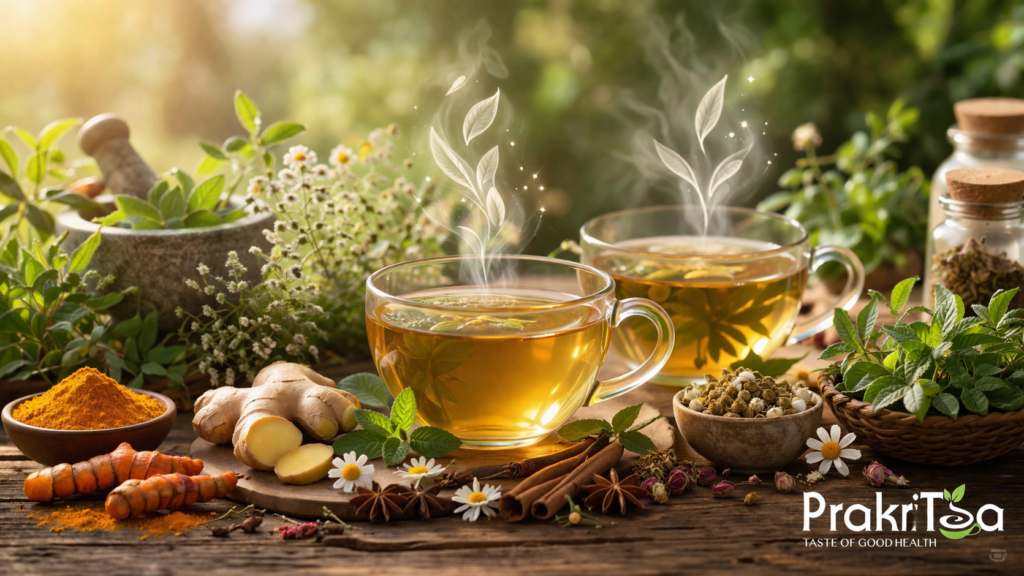
We Are Not Separate from Nature
In today’s modern world, humans often see themselves as superior to nature.
But Ayurveda and Vedic philosophy offer a completely different perspective.
They teach that:
Humans and plants are not separate — they are created from the same source: Prakriti.
This is not just a poetic idea. It is a deep philosophical and scientific truth explained in Sankhya philosophy.
ShopWhat is Prakriti? (The Core Concept)
According to Sankhya, everything in existence comes from one fundamental source — Prakriti, which is made up of three Gunas:
- Sattva – clarity, harmony, intelligence
- Rajas – movement, activity, transformation
- Tamas – inertia, heaviness, stability
Humans, plants, and animals all contain these three Gunas. The only difference is their proportion.
This is the foundation of Ayurveda.
Healing is not about removing disease — it is about restoring balance.
Humans and Plants: A Mirror of Each Other
Ancient Vedic texts describe a striking similarity between the human body and plant life:
- Skin corresponds to tree bark
- Blood corresponds to sap
- Bones correspond to hardwood
- Nerves correspond to plant fibers
Most importantly —
The same Atman (soul) exists in both.
This means harming plants without awareness is, in a subtle way, harming ourselves.
The Science of Gunas in Herbs (Ayurvedic Infusion)
In Ayurveda, herbs are not just chemical substances —
they are carriers of energy and consciousness.
The way you prepare herbs determines what quality (Guna) enters your body.
Water acts as the bridge between plant intelligence and human consciousness.
Sattva: The Pure Healing State (3–5 Minute Infusion)
When herbs are gently steeped in warm water for 3–5 minutes:
- The plant releases its essence naturally
- No force or destruction is involved
Result:
- Calms the mind
- Reduces stress
- Supports immunity
- Enhances clarity and inner balance
This is not just tea — it is a subtle exchange of energy.
Rajas: The Energy of Action (Over Infusion)
When herbs are steeped for a longer time:
- Strong compounds like tannins and alkaloids are extracted
- The taste becomes stronger and more intense
Effect:
- Boosts energy and metabolism
- Improves digestion
- But overuse can lead to restlessness and mental agitation
This is functional use, not gentle nourishment.
Tamas: The State of Inertia (Boiling Herbs)
When delicate herbs are directly boiled:
- Their natural energy is destroyed
Effect:
- Creates heaviness in the body
- Leads to low energy and dullness
- Reduces mental clarity
This is a common mistake in modern tea preparation.
Conscious Harvesting: The Forgotten Ayurvedic Principle
Ayurveda is not only about consumption — it is also about respect for nature.
Ancient Vedic practices emphasize:
- Taking herbs with gratitude
- Maintaining a calm and respectful mindset
- Avoiding greed and over-harvesting
When herbs are taken with awareness, their healing power increases.
Without respect, only their physical form remains — not their subtle energy.
Why This Wisdom Matters Today
Modern life has created a disconnect from:
- Natural food sources
- Environmental rhythms
- Conscious living
As a result:
- Stress levels are rising
- Lifestyle diseases are increasing
Ayurveda is not outdated — it is a powerful solution for modern problems.
The Prakritea Approach
At Prakritea, this philosophy guides everything:
- Herbs are treated as living intelligence
- Gentle processing is preferred
- Sattvic preparation is prioritized
- Gratitude is part of quality
True healing begins even before the tea is consumed.
Conclusion: One Source, Many Forms
Humans and plants do not connect at consumption.
They are already connected at the source.
The same Prakriti flows through:
- Skin and bark
- Blood and sap
- Body and nature
Understanding this is not going backward —
it is returning to truth.
One Prakriti. One Life. One Consciousness.
Follow Us:
Instagram: prakritea.india
Facebook: PrakriTea
Youtube: prakritea_india