
In Ayurveda, true health is not defined by the absence of illness.
It is a state of dynamic equilibrium, where digestion, metabolism, mind, and environment move in harmony.
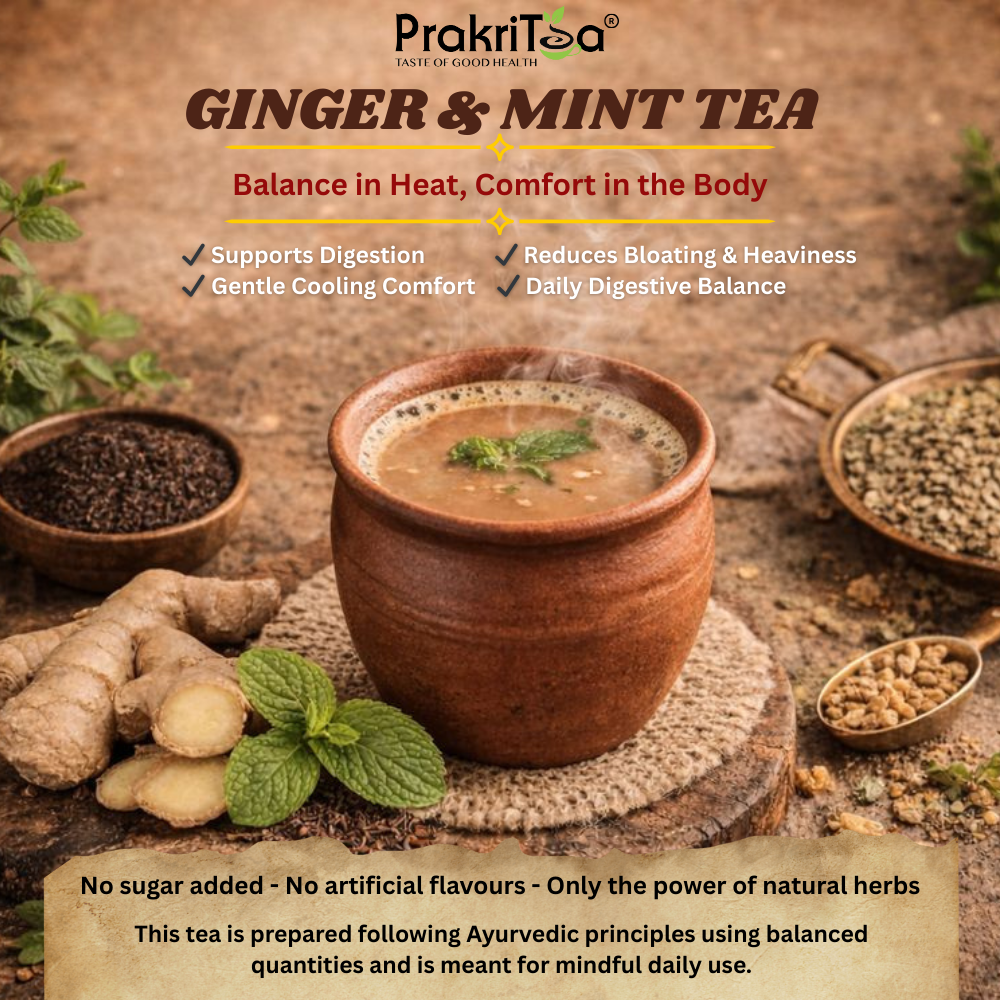
Your Ginger Phudina Chai with milk is not just a comforting beverage. It is a carefully balanced formulation rooted in classical Ayurvedic intelligence. Every ingredient plays a corrective role, ensuring the body is supported rather than overstimulated.
This is not flavour engineering.
This is physiological wisdom.
Understanding Prakriti: Why Balance Matters
Ayurveda recognizes that every individual is born with a unique Prakriti (constitution), governed by the three Doshas:
• Vata (movement, dryness, cold)
• Pitta (heat, metabolism)
• Kapha (structure, heaviness)
Daily life, seasons, stress, and diet constantly disturb this balance. A truly intelligent beverage does not push the body in one direction. It self-adjusts.
That is exactly what Ginger Phudina Chai does.
The Alchemy of Opposites: Warming Ginger and Cooling Mint
Dried Ginger (Sunthi): The Universal Medicine
In Ayurveda, dried ginger is revered as Vishwabheshaja, the universal remedy.
According to the Bhavaprakasha Nighantu:
• Virya (Potency): Ushna (warming)
• Vipaka (Post-digestive effect): Madhura (sweet)
• Action: Deepana (kindles digestion), Pachana (burns toxins)
Unlike fresh ginger (Ardraka), dried ginger is:
• More concentrated
• More penetrating
• Less acidic
• Better at clearing Ama (undigested metabolic waste)
It reaches deep tissues, awakens Agni, and restores metabolic rhythm.
Mint (Phudina): The Cooling Regulator
Mint brings the counterbalance.
Ayurvedically, mint is:
• Cooling and soothing
• Antispasmodic
• Carminative
It relaxes the gastrointestinal tract, reduces bloating, and calms heat-related discomforts like acidity and irritation.
Where ginger activates, mint moderates.
The “Safety Net” Effect: Why This Tea Is Tridoshic
This blend creates a built-in dosha safety mechanism:
• If Pitta (heat) is dominant
→ Mint prevents ginger from aggravating acidity
• If Vata or Kapha (cold, sluggishness) is dominant
→ Ginger prevents mint from weakening digestion
This mutual regulation makes Ginger Phudina Chai Tridoshic, meaning it is generally safe and beneficial for almost everyone, across seasons and constitutions.
This is rare. And intentional.
Milk, Ginger, and Viruddha Ahara: A Crucial Distinction
Ayurveda pays close attention to food compatibility, known as Viruddha Ahara.
Why Fresh Ginger and Milk Conflict
Fresh ginger juice is:
• Highly pungent
• Acidic
• Sharp in action
When combined with milk, it can:
• Curdle digestion internally
• Create Ama over time
• Lead to skin issues, sluggish metabolism, and subtle tissue imbalance
Classical Ayurveda warns that repeated consumption of incompatible foods can manifest as chronic disorders, including premature ageing signs.
Why Dried Ginger (Sunthi) Works with Milk
The drying process fundamentally changes ginger’s nature.
Sunthi:
• Loses excess acidity
• Develops a sweeter Vipaka
• Becomes more harmonizing with milk’s heavy, nourishing qualities
This compatibility is well documented in the Charaka Samhita, especially in the Annapanavidhi section, which explains how spices transform foods into medicine when used correctly.
Your formulation respects this principle.
Additional Health Benefits of Ginger Phudina Chai
1. Respiratory and Immunity Support
• Clears micro-channels (Srotas)
• Helps manage seasonal cough, cold, and congestion
• Supports lung function in damp or cold weather
2. Metabolic Activation
• Ginger improves fat metabolism and insulin sensitivity
• Mint supports liver health by encouraging bile flow
This combination supports healthy weight management without stressing the body.
3. Mental Clarity and Nervous Balance
• Ginger gently stimulates alertness
• Mint reduces tension headaches and mental overheating
Together, they promote a Sattvic state: clear, calm, and focused.
Milk as a Yogavahi (Carrier)
In Ayurveda, milk is considered a Yogavahi, a carrier substance that transports herbs deeper into tissues when compatibility is maintained.
In this chai:
• Milk nourishes
• Ginger ensures digestion
• Mint ensures balance
The result is nourishment without heaviness.
Classical Ayurvedic References for Deeper Study
For those who wish to explore further:
• Charaka Samhita
Detailed insights on food, spices, and digestion
• Ashtanga Hridaya
Practical understanding of daily routines (Dinacharya) and herbal balance
• Bhavaprakasha Nighantu
Clear differentiation between fresh and dried ginger
Why This Chai Matters Today
Modern life weakens digestion, overstimulates the nervous system, and disconnects us from food intelligence.
Ginger Phudina Chai restores:
• Digestive rhythm
• Thermal balance
• Mental clarity
• Daily ritual consciousness
It is gentle enough for everyday use, yet intelligent enough to function as medicine.
The Prakritea Approach
At Prakritea, this chai reflects our philosophy:
• Balance over excess
• Compatibility over trend
• Ancient wisdom applied to modern life
This is not just chai.
It is Ayurveda in a cup.
Instagram: prakritea.india
Facebook: PrakriTea
Youtube: prakritea_india